58 essays
Writing
What AI changes in how teams build, and what it doesn't. Notes on AI-native products, platforms and operating models, from twenty years of building technology that pays its way.
The Software Factory Died Twice. Here Is What Has to Be True for the Third Time.
Software factories were tried in 1980s Japan and again across US Defense. Both fell short in the same way. The agentic version in 2026 is different in one specific respect, and it is not the agents.
All writing

I asked an AI to summarize a book about how people learn. It took me a second to notice what I had just done, and longer to work out why it bothered me.
Read
Most engineering orgs added AI but kept the rituals built for a slower era. Here are eleven things to retire this quarter, and what to replace them with.
ReadMost teams added AI to sprint workflows that no longer fit. Here's the new cadence AI-native teams run on: rituals, rhythm, and the metrics that anchor it.
ReadThe Engineering Manager role used to be one job. It is now two, and most orgs have not noticed. Here's the split, the second role, and how to staff it.
Read
Block made an honest case for removing the middle management layer. Most companies copy the conclusion without the work. That gap is where careers get ended.
ReadYour AI rollout did not move delivery because your org chart is built for 2020. The fix: smaller teams, senior-weighted, fewer handoffs. Step-by-step inside.
Read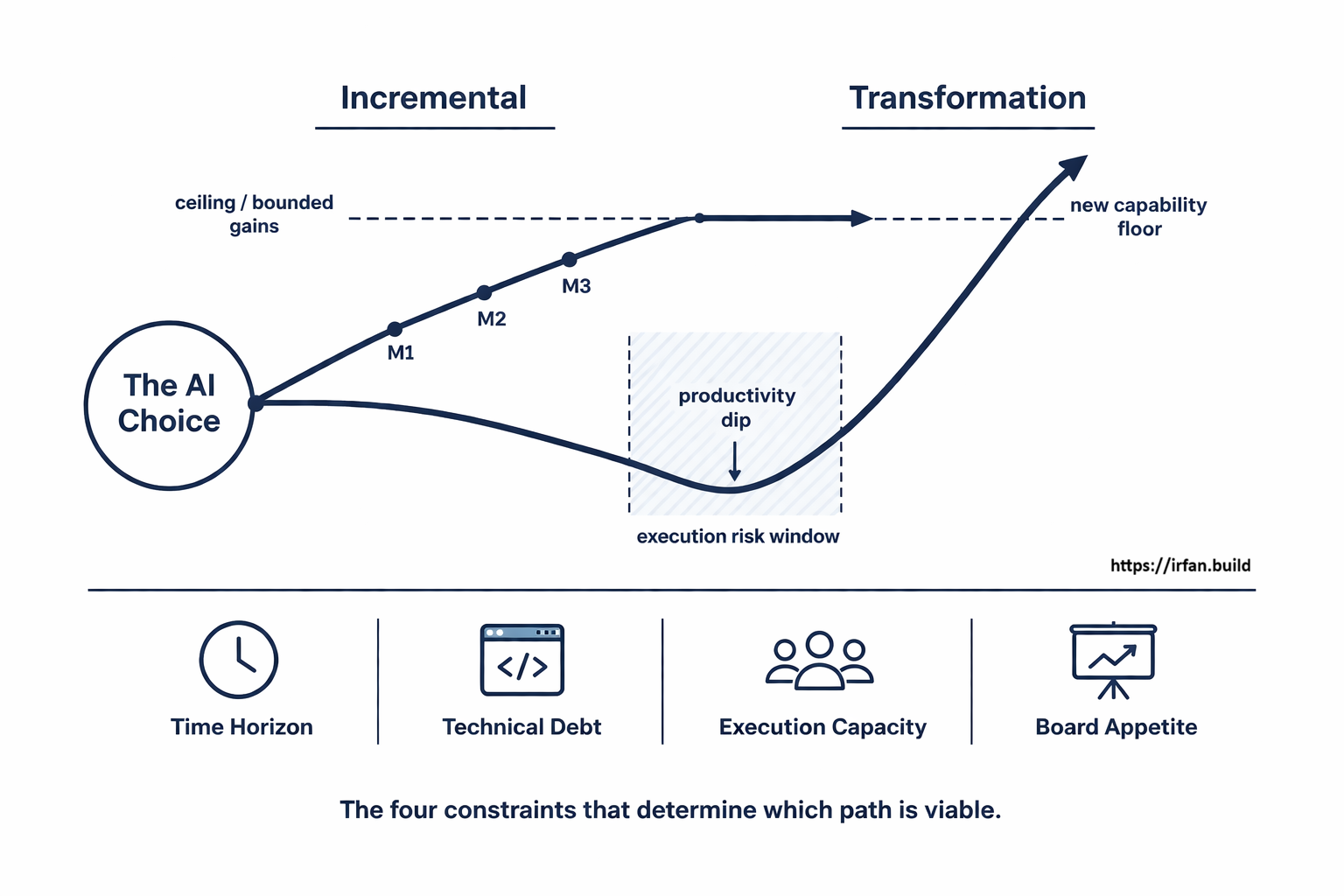
Most CTOs frame this as a technology decision. It isn't. The choice between incremental AI and full transformation is determined by four business constraints, not technical preference.
Read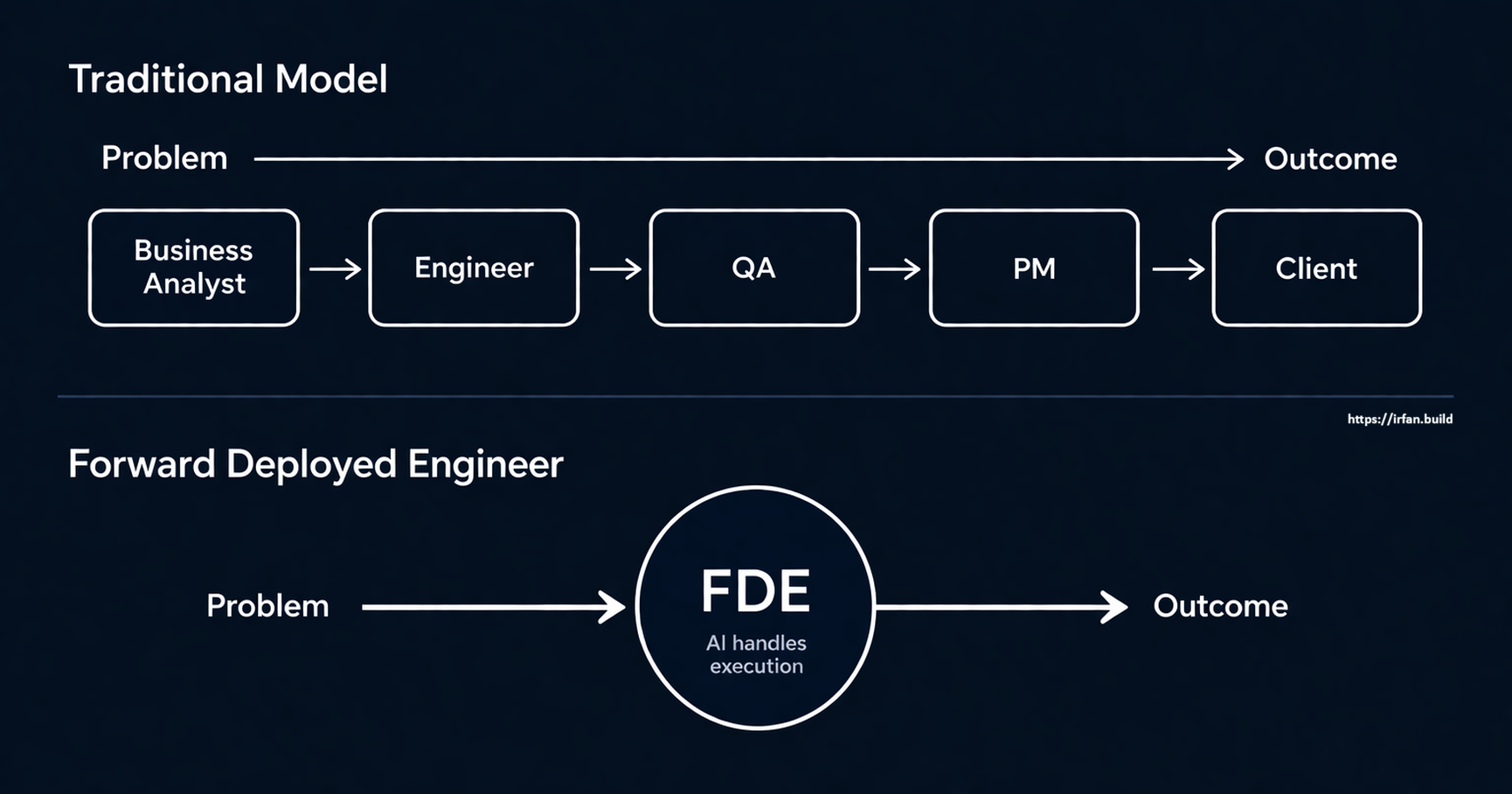
Palantir built a role in 2015 that most companies had never heard of. One engineer, full ownership, deployed directly into the client's problem. AI didn't create the role. It made it possible at scale.
Read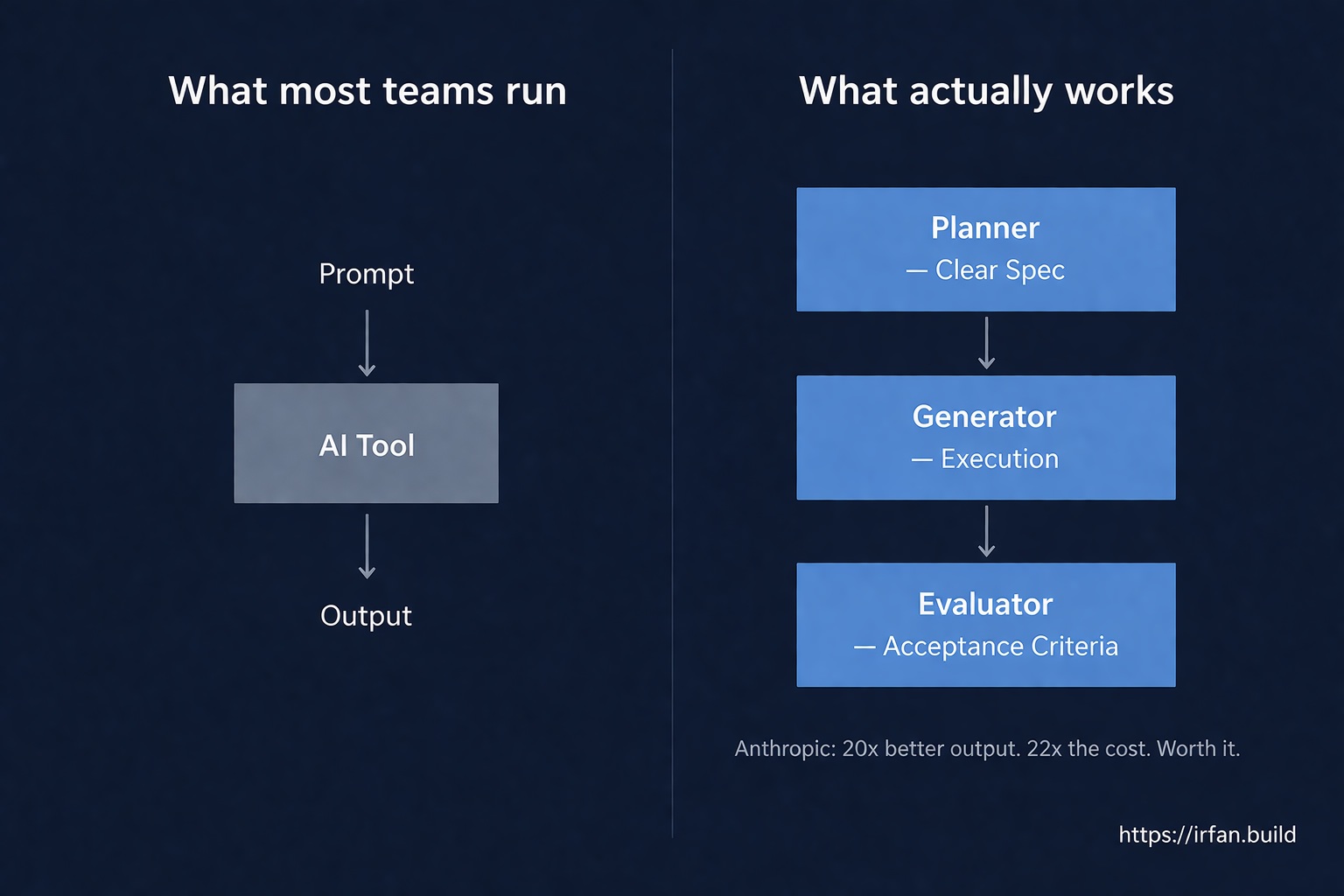
Anthropic's engineering team published a technical deep-dive on multi-agent harness design. What they actually published was an org chart, and it explains exactly why most AI initiatives produce underwhelming results.
Read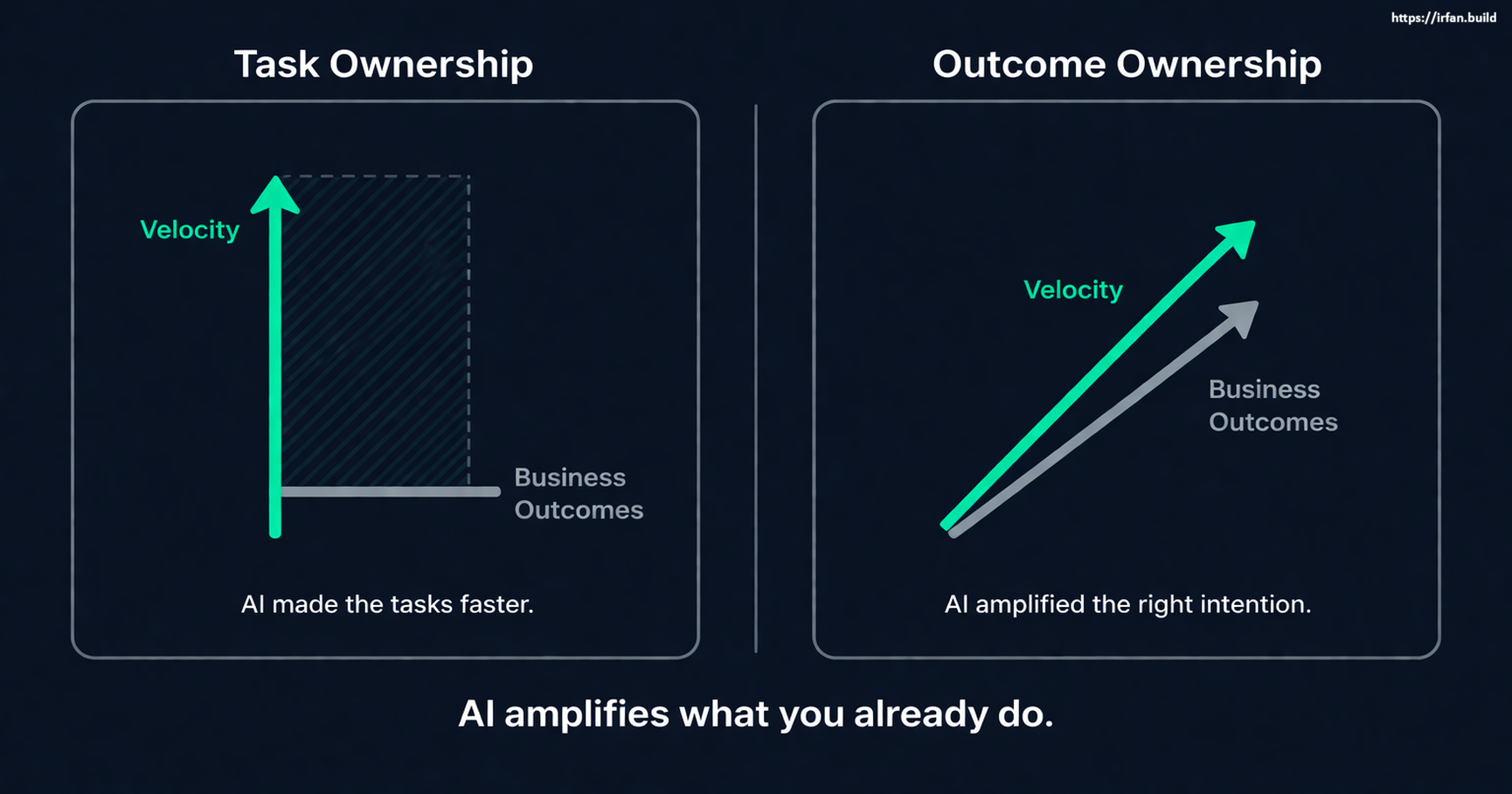
Teams frustrated with AI ROI share a common pattern. The tools are working. The work is getting done faster. The business outcomes have not changed. That is not a tools problem.
ReadMost teams survive one AI productivity dip and call the transformation done. The AI adoption J-curve does not happen once. It happens at every level of maturity, and the teams that know this build differently.
ReadSingapore's growth-stage companies are well-funded and technically ambitious. The technology leadership gap they face is not about capability in the market. It is about finding the right engagement at the right stage.
ReadThree different tools with three different design philosophies. Here is an honest comparison from someone who has used all three in production, and the framework for deciding which one belongs in your workflow.
ReadHealthcare engineering teams face constraints that make the standard AI adoption playbook dangerous. The maturity model still applies, but the sequence and risk tolerance are different.
ReadPrompt engineering is about what you say. Context engineering is about what you build. It is the emerging discipline that determines whether AI tools produce consistent, accurate output or confident-sounding nonsense.
Read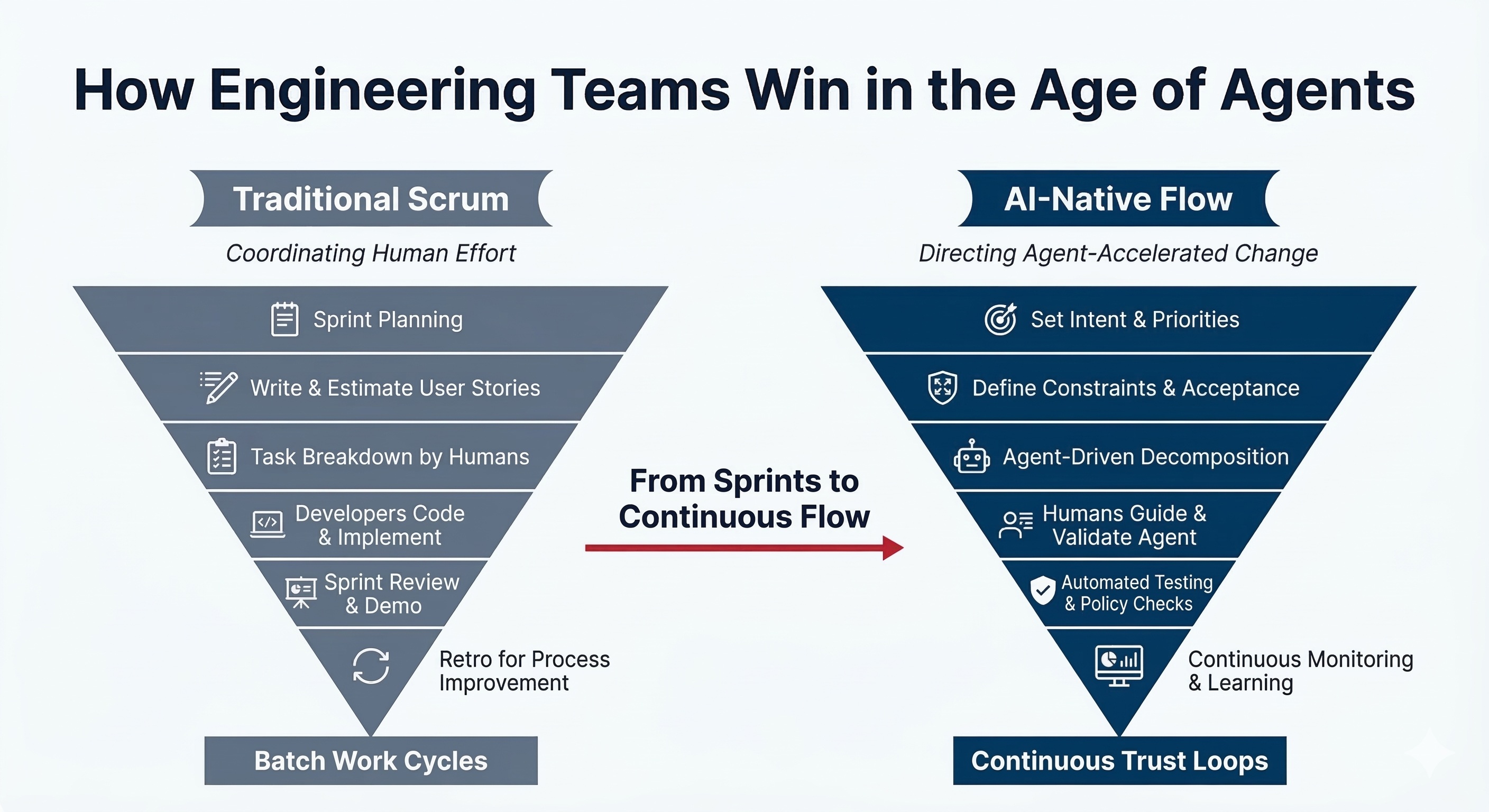
Agents made execution cheap. The bottleneck moved to context and verification. Here's the operating model engineering teams are using to win.
ReadMalaysia's growth companies face a specific technology leadership gap: too early for a full-time CTO, too complex for a part-time advisor. Here is what the right engagement looks like and how to evaluate it.
ReadThe default way most engineers use Claude Code leaves significant value on the table. Here is the workflow pattern that consistently produces better output with less friction.
ReadAgentic coding is not vibe coding with a longer leash. It is a specific way of structuring development work so that AI agents can execute reliably within defined boundaries. Here is what it actually looks like.
ReadWhen building gets cheap, the bottleneck moves to problem discovery and outcome ownership. The PM who writes tickets gets exposed. The PM who owns the outcome gets stronger.
Read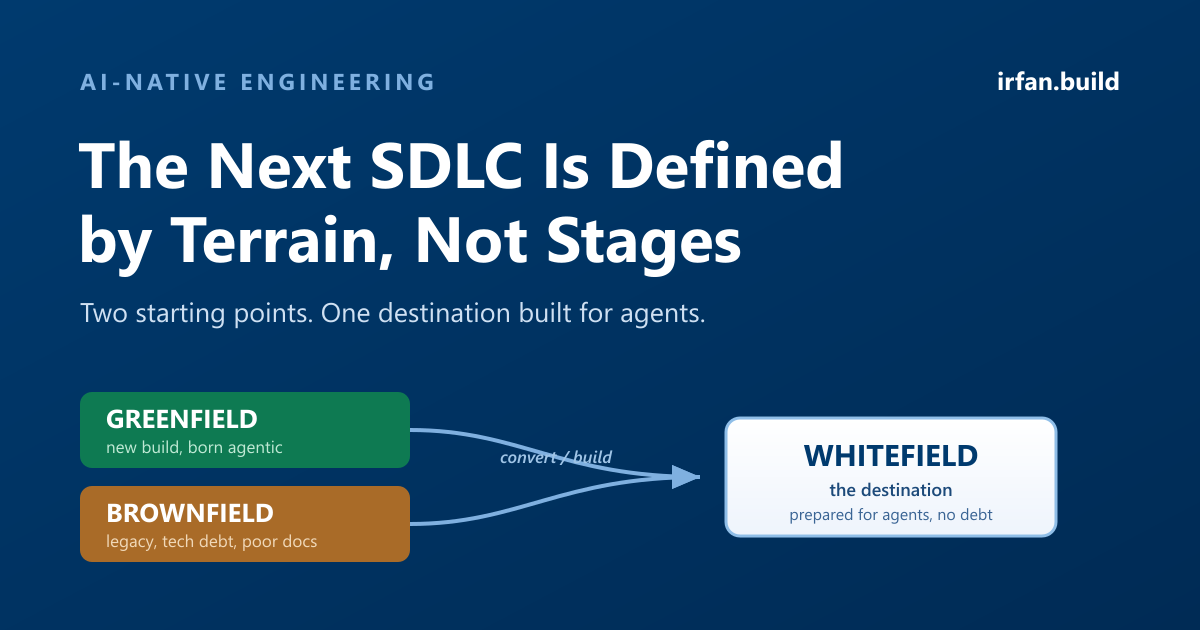
Most engineering teams are running AI on the wrong terrain. The Greenfield, Brownfield, WhiteField framework explains why results disappoint and what to change.
ReadAI tools increased PR volume by 98% on some teams. Code review processes designed for human-paced output cannot handle that. The bottleneck is now review, not production, and the fix is not reviewing faster.
ReadEntry-level engineering roles have dropped significantly since AI tool adoption accelerated. Most engineering leaders are not paying attention to this. They should be.
ReadMost AI coding tool evaluations are run by individual developers and optimised for developer experience. That produces a different answer than an evaluation optimised for team outcomes. Here is how to run the right evaluation.
Read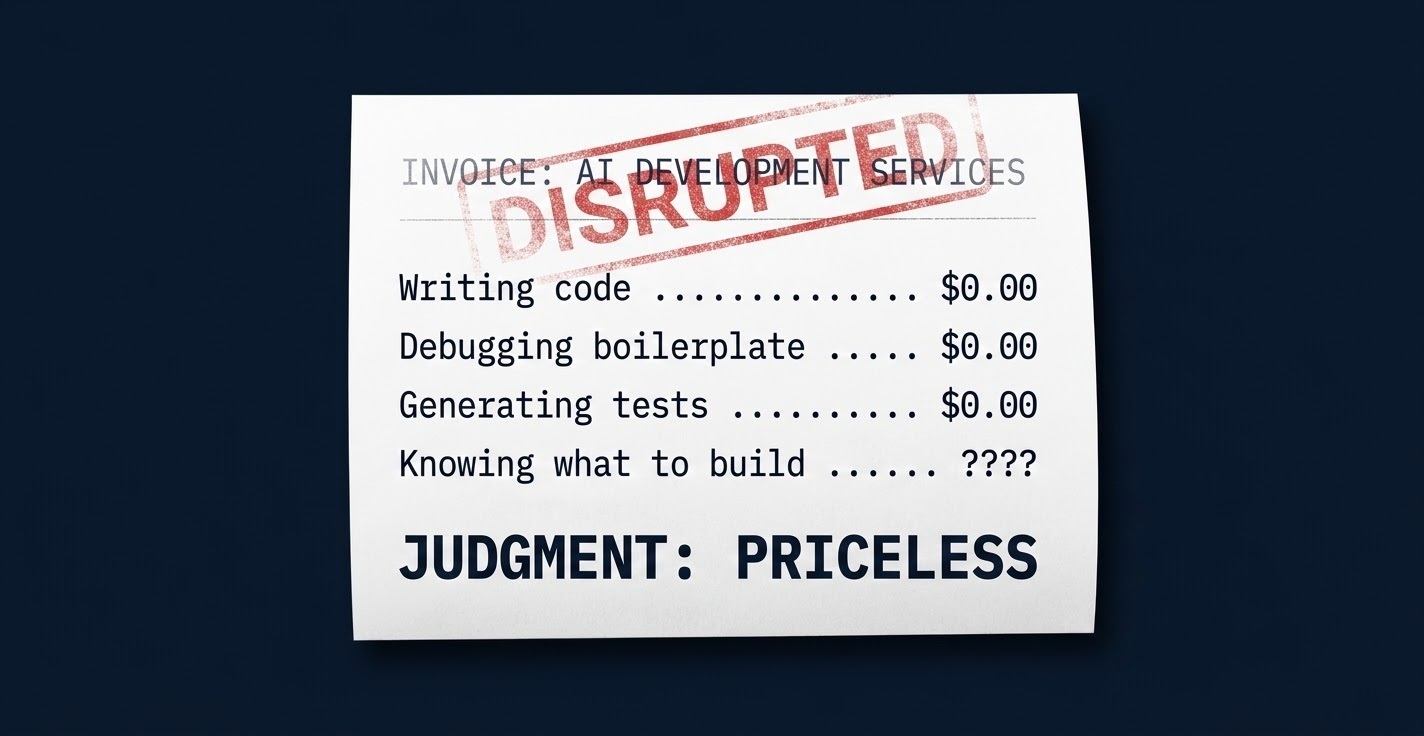
For 30 years, writing code was the bottleneck in software. AI removed it. Now teams can see which engineers had judgment, and which had execution.
ReadClaude Code is not just an AI chat window in your terminal. It has a four-layer architecture that determines how it behaves. Understanding it changes how you set it up and what you get out of it.
ReadAI changed what execution costs. It did not change what leadership requires. But it did change what leadership looks like, and most engineering leaders have not yet made that adjustment.
ReadAI-native engineering is not using AI tools. This guide covers what it means, the four capabilities required, and the L1-L4 maturity model that separates real transformation from tool adoption.
ReadA fractional CTO is not a part-time CTO. This guide explains what the role covers, when to hire one, and how to avoid an engagement that ends with advice and no real change.
ReadMost teams using AI tools are stuck at L2. Here are the four AI maturity levels, how to assess where your team sits, and what the move to L3 actually requires.
ReadTeams not using AI tools consistently are not just missing productivity gains. They are accumulating a competitive disadvantage that compounds month by month.
ReadFractional CTOs in Southeast Asia face a different context: a distinct talent market, different AI adoption stage, and a specific advantage most founders miss.
ReadMost fractional CTO engagements end with a roadmap in a Google Doc. The ones that work install something durable. Here's how to tell the difference.
ReadPRs are up. So are incidents. The 2026 data shows a pattern I've watched play out across engineering teams, and the fix is not what most leaders expect.
ReadL3 AI maturity is achievable in four to twelve weeks. Most teams do not get there because they try to do everything at once. Here is the sequence that works.
ReadBy day 30, a good fractional CTO engagement produces something tangible, not a strategy document. Here is the week-by-week of what should actually happen.
ReadClaude Code is excellent on small, well-structured codebases. On large repositories, it degrades in specific, predictable ways. Understanding why tells you exactly what to fix.
ReadMost fractional CTO engagements fail not because of who you hire but because of how scope is set. Here is how to structure an engagement for real outcomes.
ReadMost teams measure AI adoption with velocity and tool licences. Both metrics miss the point. Here are the six metrics that actually show whether AI is working for your team.
ReadBuild app with AI agents and the bottleneck is no longer code. I shipped a production assessment tool in three days. Here's what that actually required.
ReadThe fractional CTO market rate ranges from $2,000 to $20,000 per month. Here is what drives the price, what each tier actually buys, and how to evaluate whether you are getting value.
ReadCLAUDE.md is the single highest-leverage thing an engineering team can do to make AI tools work reliably. Here is what to put in it, what to leave out, and how to keep it alive.
ReadThe question is not which is better. It is which one matches your current problem. Three criteria that tell you clearly whether to hire fractional or full-time.
ReadVibe coding was a useful first phase. Generate, accept, ship, repeat. It worked until it didn't. The teams that figured out what comes next are operating in a different gear entirely.
ReadThree diagnostic tests that reveal whether your engineering team is truly AI-native or just AI-assisted, and why the difference determines what you should do next.
ReadSoftware agency AI disruption is reshaping who wins development work. A solo builder with the right stack out-ships agency teams on most standard projects.
ReadClaude Code Hooks are deterministic callbacks that run before and after every agent action. They are the difference between an AI tool you can trust in production and one that occasionally does something you did not ask for.
ReadSlow delivery is a systems problem, not a staffing one. Adding engineers to a broken system makes it louder, not faster. Here's what actually fixes it.
ReadClaude Code Skills are reusable, auto-invoked knowledge packs that make AI tools work consistently across an entire team. Here is how they work and how to build them.
ReadAI agents fail in production codebases because the repo isn't built for them. Four layers separate agent-ready codebases from the rest.
ReadThe EM job was written for a world where engineers were the bottleneck. AI changed that. Most EMs are still optimising for the role that no longer exists.
ReadEngineering teams adopted AI into org structures built for slow execution. Coding is no longer the bottleneck. The structure is. Here is where to start.
Read69% of organisations found security vulnerabilities in AI-generated code. PR volume doubled. Security review capacity did not. The debt is accumulating.
ReadEvery board is asking 'are we using AI?' It's the wrong question. CTOs who win this conversation reframe it: not adoption rate, but what the business can now do.
ReadAI requirements planning doesn't fix vague specs, it accelerates them. Teams now build the wrong thing faster, with more confidence, at a higher cost to undo.
ReadDeepSeek R1 made AI dramatically cheaper for engineering teams. Most leaders took the wrong lesson. Cost was never the bottleneck. Here is what actually is.
ReadThe cost-arbitrage era of offshoring is ending. AI changes the math. Here's how to transition from a large offshore team to a smaller, faster onshore one.
Read